

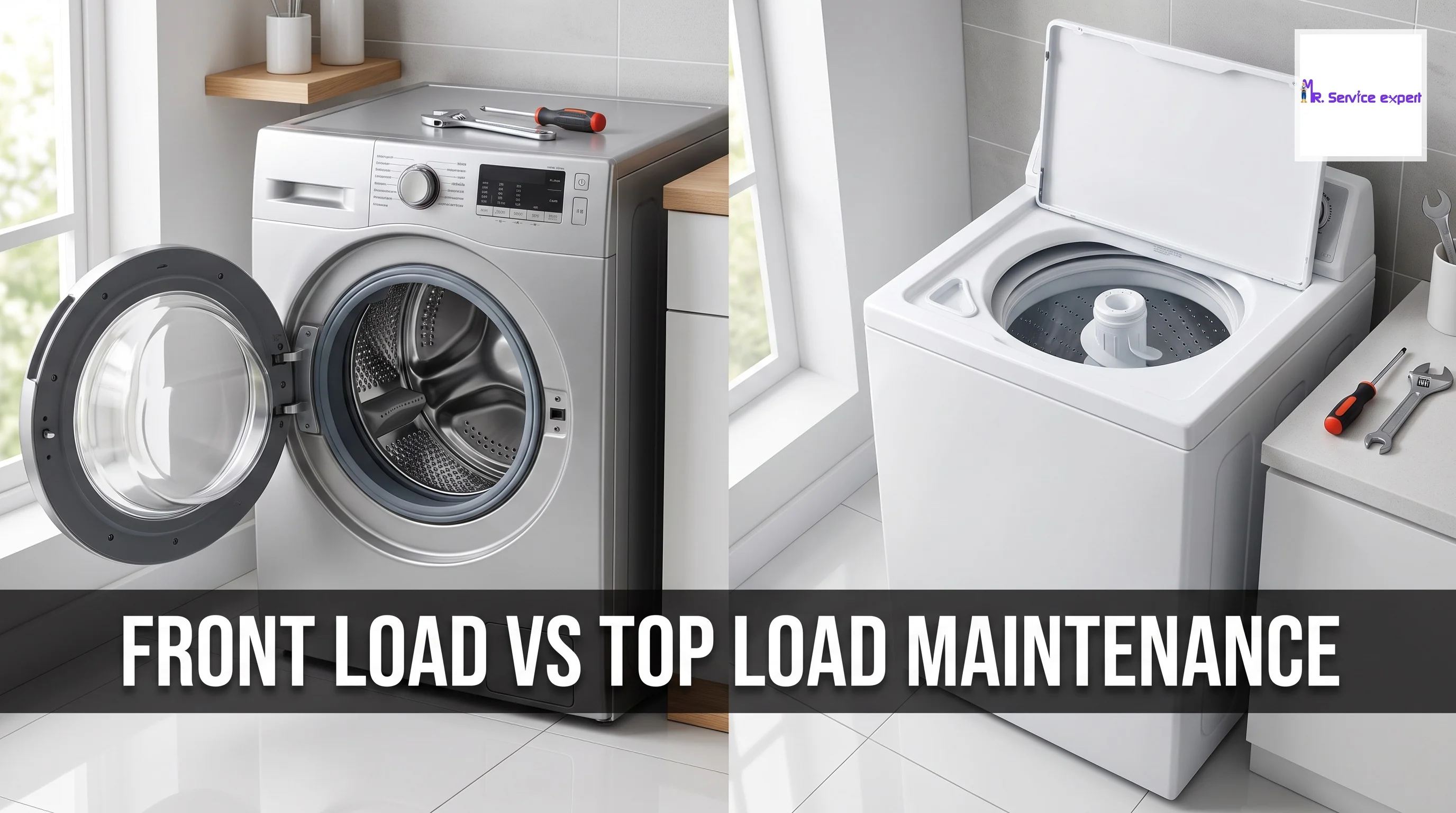
Front Load vs Top Load Washing Machine: Repair & Maintenance Differences
Choosing between a front load and top load washing machine is not just about initial purchase price or washing performance. The real difference often shows up months or years later when you need repairs or regular maintenance. Many Indian households discover that their washing machine choice impacts their long-term service costs, repair frequency, and overall hassle significantly. Understanding these repair and maintenance differences can save you thousands of rupees and countless headaches over the appliance's lifetime.
Front load washing machine repair needs differ vastly from top load washing machine service requirements. The design differences between these two types mean they face different mechanical stresses, have different vulnerable components, and require different expertise levels for fixing. While front loaders are known for superior washing performance and water efficiency, they often demand more specialized maintenance. Top loaders, on the other hand, have simpler mechanics but their own unique service challenges that every owner should understand before making a purchase decision.
The maintenance landscape for washing machines in India has evolved significantly by 2026. With water quality variations across different regions, power fluctuations in many areas, and heavy usage patterns in Indian households, both machine types face stress that manufacturers in other countries might not anticipate. This makes understanding repair and maintenance differences even more critical for Indian consumers who want their investment to last.
Whether you already own one of these machines or are planning to buy, knowing what repairs to expect, how much they typically cost, and what preventive maintenance each type needs will help you make informed decisions. This comprehensive guide breaks down every aspect of washing machine repair service requirements, common problems, cost comparisons, and maintenance routines specific to Indian conditions.
By the end of this article, you will have a clear picture of which machine type suits your maintenance capabilities, budget, and lifestyle better. Let us dive deep into the repair and maintenance world of front load versus top load washing machines, examining everything from simple fixes to complex mechanical failures.
Design Differences That Impact Repairs
The fundamental design variations between front load and top load washing machines directly influence their repair needs. Front loaders use a horizontal drum that rotates on a horizontal axis, requiring a sophisticated door seal, complex bearing system, and advanced suspension mechanism. This horizontal design means clothes tumble through water rather than sitting in it, which is great for washing efficiency but creates specific mechanical vulnerabilities that require specialized front load washing machine repair expertise.
Top load machines feature a vertical drum design with an agitator or impeller at the bottom. This simpler mechanical arrangement means fewer complex components that can fail. The vertical orientation puts different stresses on bearings and requires different water inlet configurations. When you need top load washing machine service, technicians generally find the access points easier to reach and the components more straightforward to replace. The agitator mechanism, while simpler than front loader internals, has its own wear patterns that develop over time with regular use.
Water sealing presents different challenges for each type. Front loaders must seal a large front-facing door that holds back the entire drum's water volume, making door gasket maintenance critical. Top loaders only need to seal around the lid, which experiences far less water pressure and stress. This single design difference accounts for one of the most common repair calls for front loaders versus top loaders in Indian households.
The motor placement and drive system also differ significantly. Front load motors typically sit at the back or bottom of the drum, connected through a belt or direct drive system that must handle the horizontal rotation stress. Top load motors usually mount below the drum with a more direct vertical power transfer. This affects how motor-related repairs are approached and which washing machine technician skills are needed for effective fixes.
Suspension and balancing systems represent another major design difference. Front loaders need sophisticated suspension to handle the centrifugal forces of horizontal high-speed spinning, using springs, shock absorbers, and counterweights. Top loaders have simpler suspension needs with their vertical spin axis. When these systems fail, front loader repairs are invariably more complex and expensive than their top loader counterparts.
Common Repair Issues in Front Load Machines
Front load washing machines face several recurring repair challenges that owners should anticipate. The door seal or gasket ranks as the most frequent problem, developing mold, tears, or losing elasticity after 3-4 years of use in Indian conditions. This rubber component must remain flexible while withstanding constant water exposure, detergent chemicals, and stress of door opening and closing. Replacing a door gasket typically costs between INR 1,500 to INR 3,500 including labor, and requires specific front load washing machine repair knowledge to install correctly without leaks.
Bearing failures represent another common and expensive issue. The horizontal drum design places unique stress on bearings that support the drum's weight and rotation. Hard water conditions prevalent in many Indian cities accelerate bearing wear by allowing mineral deposits to form. When bearings fail, you will hear loud grinding or rumbling noises during the spin cycle. Bearing replacement is labor-intensive, often costing INR 3,000 to INR 6,000 depending on the machine model, as it requires partial disassembly of the drum assembly.
Door latch and lock mechanisms malfunction frequently because they must work perfectly to prevent water leakage. These electronic or mechanical locks prevent door opening during operation and often fail after repeated use. A malfunctioning door lock means your machine will not start or will stop mid-cycle, requiring washing machine repair service that usually costs INR 800 to INR 2,000 for the part and installation.
Drain pump blockages and failures occur regularly because lint, coins, buttons, and debris accumulate in the pump filter. While cleaning the filter is user-maintainable, pump motor failure requires professional intervention. The low-mounted drain pump in front loaders makes it vulnerable to foreign object damage. Pump replacement typically runs INR 1,200 to INR 2,800 depending on the model.
Suspension shock absorbers wear out over time, causing excessive vibration and movement during spin cycles. This issue becomes noticeable when the machine starts "walking" across the floor or making loud banging noises. Replacing shock absorbers costs between INR 2,000 to INR 4,000 for a set, and improper installation can lead to further mechanical problems, making professional washing machine technician expertise essential.
Common Repair Issues in Top Load Machines
Top load washing machines have their own characteristic repair problems that differ from front loaders. The agitator or impeller mechanism represents the most common failure point in traditional top loaders. Agitator dogs, small plastic cams that allow the agitator to move in one direction, wear out with regular use and need replacement every 2-3 years in heavy-use households. This repair is relatively simple and costs only INR 300 to INR 800, making top load washing machine service generally more affordable for this common issue.
Transmission problems occur more frequently in top loaders than front loaders due to the gearbox required for the agitator's back-and-forth motion. When the transmission fails, you might notice the drum not spinning properly or making grinding noises. This represents one of the more expensive top loader repairs, ranging from INR 3,000 to INR 7,000 depending on whether repair or full replacement is needed. However, the simpler access to top loader internals makes this repair less labor-intensive than equivalent front loader fixes.
Lid switch failures prevent the machine from operating when the lid is closed, a safety feature that can malfunction over time. This simple component costs only INR 200 to INR 600 to replace, and many handy homeowners can do it themselves without calling for washing machine repair service. The accessibility of top loader components makes many repairs more DIY-friendly compared to front loaders.
Water inlet valve problems affect both machine types, but top loaders experience more issues due to their higher water volume requirements. Mineral deposits from hard water clog these valves, causing slow filling or no filling at all. Valve replacement costs INR 600 to INR 1,500 and is straightforward for most washing machine technicians, with the repair typically completed in under an hour.
Clutch assembly wear is specific to top loaders and occurs when the mechanism that engages the spin cycle deteriorates. Symptoms include failure to spin or spinning at reduced speed. Clutch replacement costs between INR 1,500 to INR 3,500 and requires moderate technical skill. The relatively simple access in top loaders makes this repair quicker and less expensive than comparable mechanical repairs in front loaders.
Maintenance Requirements Comparison
Preventive maintenance differs significantly between front load and top load machines, affecting long-term ownership costs and effort. Front loaders demand more frequent attention to prevent common problems. Monthly door gasket cleaning is essential to prevent mold and mildew buildup, requiring users to wipe down the rubber seal and leave the door ajar after each wash. Neglecting this simple maintenance leads to odor problems and premature gasket deterioration that necessitates front load washing machine repair calls.
Running monthly cleaning cycles with washing machine cleaner or vinegar prevents detergent residue and mineral buildup in front loaders. The low-water design means residues concentrate more than in top loaders, making this maintenance crucial. Many Indian users skip this step, leading to drainage issues, odors, and eventually more serious mechanical problems. The cleaning cycle uses minimal water and takes about an hour, but prevents repairs costing thousands of rupees.
Top load washing machine service requirements focus more on periodic inspection of the agitator and transmission. Checking for unusual noises or reduced agitation performance helps catch problems early. Top loaders generally need less frequent deep cleaning because their higher water volumes naturally flush away more residue. However, they still benefit from quarterly cleaning cycles, especially in hard water areas common throughout India.
Filter cleaning frequency differs dramatically between machine types. Front loaders require monthly drain pump filter cleaning to prevent blockages and pump damage. This five-minute task prevents emergency repair calls and extends pump life significantly. Top loaders typically lack user-accessible filters, routing lint and debris directly to drainage, which can lead to plumbing issues but requires less machine-specific maintenance.
Water hardness management impacts both types but requires different approaches. Front loaders benefit from using less detergent and specifically designed low-suds formulations, as excess suds damage components and leave residues. Top loaders handle regular detergents better but consume more water softener if needed. Installing a water softener system benefits both types but particularly extends front loader component life by reducing mineral deposits that cause bearing and seal failures requiring expensive washing machine repair service interventions.
Cost Analysis of Repairs Over Machine Lifetime
Understanding lifetime repair costs helps make informed purchasing decisions. Based on 2026 service data from across India, front loaders typically accumulate INR 8,000 to INR 15,000 in repair costs over a 7-10 year lifespan, while top loaders generally require INR 5,000 to INR 10,000 in repairs over the same period. These figures assume normal usage patterns and basic preventive maintenance for both types.
The repair cost difference stems from component complexity and labor requirements. Front load washing machine repair jobs typically cost 30-50 percent more than equivalent top loader repairs due to increased disassembly requirements and specialized parts. A washing machine technician typically charges INR 300 to INR 500 for a service visit, but front loader jobs often extend to 2-3 hours compared to 1-2 hours for similar top loader repairs, increasing labor costs proportionally.
| Repair Type | Front Load Cost (INR) | Top Load Cost (INR) | Frequency |
|---|---|---|---|
| Door Seal/Lid Switch | 1,500 - 3,500 | 200 - 600 | Every 3-5 years |
| Bearing Replacement | 3,000 - 6,000 | 2,000 - 4,000 | Every 5-7 years |
| Motor Issues | 2,500 - 5,000 | 2,000 - 4,000 | Every 7-10 years |
| Drain Pump | 1,200 - 2,800 | 800 - 1,800 | Every 4-6 years |
| Suspension/Clutch | 2,000 - 4,000 | 1,500 - 3,500 | Every 5-8 years |
| Transmission | Not applicable | 3,000 - 7,000 | Every 8-10 years |
Emergency repair costs also differ between machine types. Front loaders more commonly experience complete breakdowns that prevent use until repaired, such as door lock failures or severe vibration issues. Top loaders often develop gradual problems like reduced agitation that allow continued limited use while scheduling repairs, providing more flexibility in timing and potentially reducing emergency service charges.
Parts availability affects repair costs and timeline significantly. Top loader components are generally more standardized across brands and easier to source locally, often available the same day in urban areas. Front loader parts frequently require ordering from brand service centers, adding 2-7 days to repair timelines and sometimes including shipping charges of INR 200 to INR 500 that increase total washing machine repair service costs.
Extended warranty value differs between machine types. For front loaders, extended warranties often prove worthwhile given higher repair costs and frequency, potentially saving INR 3,000 to INR 8,000 over the warranty period. Top loader extended warranties provide less value unless you have very hard water or unusually heavy usage patterns that accelerate component wear.
Factors Affecting Repair Frequency
Several factors influence how often you will need repairs regardless of machine type. Water quality stands as the primary factor affecting washing machine longevity in India. Hard water with high mineral content accelerates wear on pumps, valves, heating elements, and bearings in both machine types. Areas with extremely hard water, including parts of Rajasthan, Gujarat, Haryana, and Karnataka, see repair frequencies 40-60 percent higher than regions with moderate water hardness. Installing a water softener reduces repair needs dramatically for both front load washing machine repair and top load washing machine service calls.
Usage frequency directly correlates with repair needs. Households running 10 or more wash cycles weekly experience component wear at twice the rate of those doing 5-6 weekly loads. Commercial or semi-commercial use in paying guest accommodations or small laundry businesses accelerates wear further, often requiring annual washing machine technician visits compared to every 2-3 years for normal household use.
Load size practices significantly impact mechanical stress and repair frequency. Consistently overloading either machine type strains motors, transmissions, bearings, and suspension components. Front loaders particularly suffer from overloading because their horizontal drum design creates more mechanical stress when imbalanced. Proper loading, filling the drum only 3/4 full, extends component life by 30-50 percent across both machine types.
Detergent type and quantity affect internal cleanliness and component longevity differently in each machine type. Front loaders absolutely require low-suds, high-efficiency detergent in the correct small quantities. Using regular detergent or too much detergent causes excessive sudsing that damages pumps, leaves residue that affects sensors, and accelerates seal deterioration. Top loaders tolerate regular detergent better but still benefit from appropriate quantities to prevent residue buildup requiring washing machine repair service interventions.
Power supply stability influences electronic component failures in both machine types. Voltage fluctuations common in many Indian areas damage control boards, motors, and electronic locks. Using a voltage stabilizer reduces electronic repair needs by approximately 50 percent, a worthwhile investment in areas with unreliable power supply. This single preventive measure can save multiple expensive repairs over the machine's lifetime.
Front load and top load washing machines differ dramatically in repair complexity and maintenance requirements. Front loaders typically need more frequent door seal cleaning and are prone to mold issues in humid climates, while top loaders face agitator and transmission problems but offer easier DIY access. Repair costs vary significantly—front load machines often require specialized technicians for drum bearing or suspension repairs, whereas top loaders allow simpler fixes. Learn more about which washing machine type matches your maintenance budget, technical skills, and service availability in your area to make an informed decision that saves money over your appliance's lifespan.