

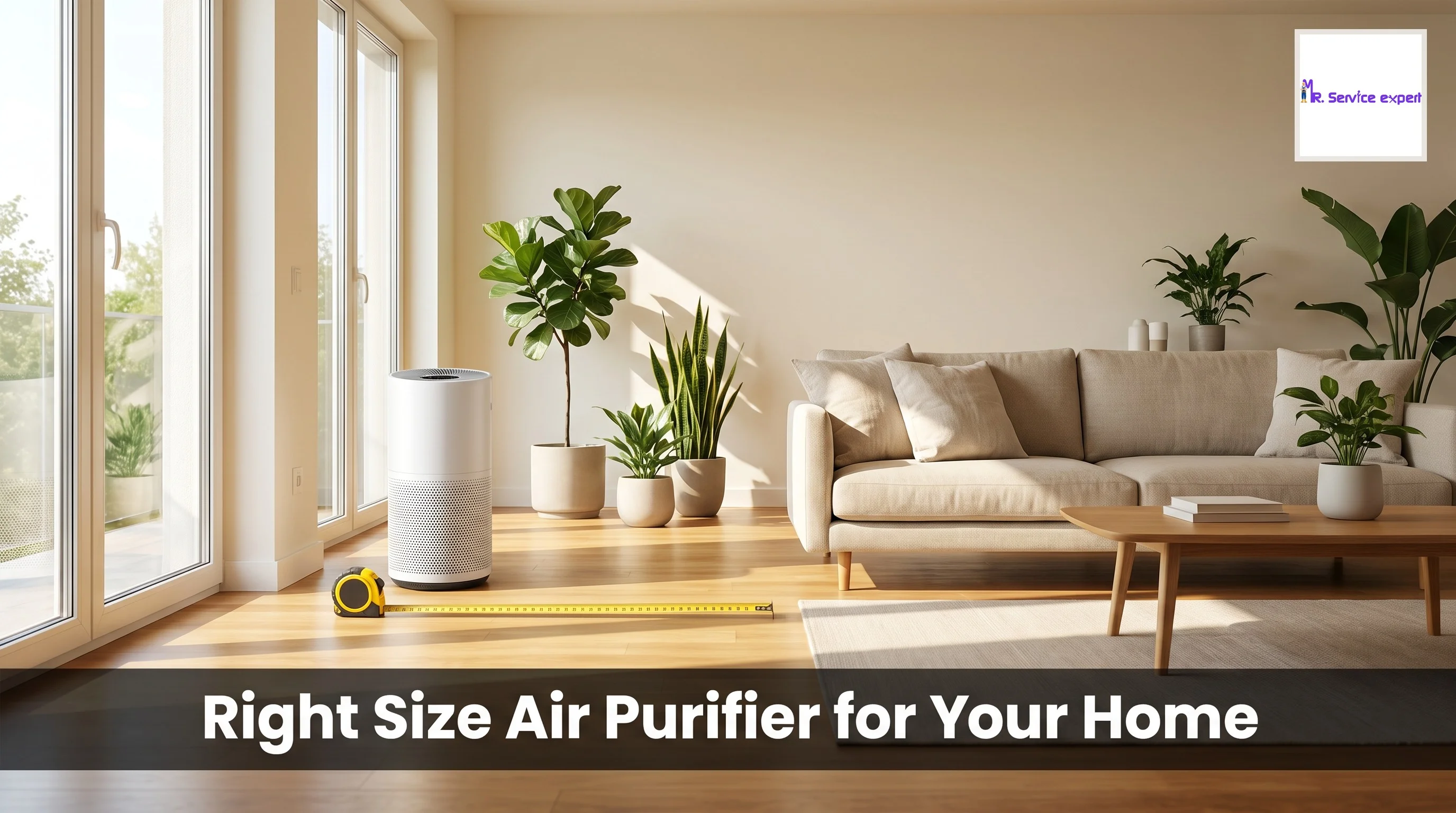
Choosing the Perfect Air Purifier Size: Your Complete Guide to Matching Room Requirements and Home Needs
Walking into an electronics store or browsing online for an Air purifier for home use can feel overwhelming. You'll see dozens of models, each claiming to be the best air purifier for home use, with different specifications, price tags, and features. But here's something most people overlook: buying the wrong size can make even the most expensive air purifier completely ineffective for your space.
Think about it like buying shoes. A size 10 won't fit properly if you need a size 8, no matter how premium the brand is. The same logic applies when you're selecting an air purifier. The coverage area, room dimensions, and airflow capacity must match your actual requirements. Many Indian households make the mistake of purchasing compact models for large living rooms or oversized units for small bedrooms, wasting money and energy in the process.
Clean air isn't just a luxury anymore, especially in cities like Delhi, Mumbai, Bangalore, and Kolkata where AQI levels regularly spike during certain seasons. Indoor air quality affects your family's health, sleep quality, and overall wellbeing. But breathing cleaner air starts with making informed decisions based on your home's specific layout and size requirements.
This air purifier buying guide will walk you through everything you need to know about matching air purifier size to your rooms. We'll cover coverage calculations, CADR ratings, ceiling heights, and practical tips that work specifically for Indian homes. By the end, you'll know exactly which specifications to look for, how to measure your space correctly, and how to avoid common purchasing mistakes.
Whether you live in a compact 2BHK apartment or a spacious independent house, understanding these fundamentals will help you choose wisely and ensure your investment actually delivers the clean air your family deserves.
Understanding Air Purifier Coverage Area and Room Size Basics
The most important specification on any air purifier box is the coverage area, usually mentioned in square feet or square meters. This tells you the maximum floor space the device can effectively clean. However, many buyers simply match this number to their room size without considering other factors, which leads to poor performance.
Coverage area calculations assume standard ceiling heights of 8 to 10 feet. Indian homes often have varying ceiling heights, especially in older constructions or modern apartments with false ceilings. A 300 square feet room with 12-foot ceilings contains significantly more air volume than the same floor area with 8-foot ceilings. This means your air purifier needs to work harder and longer to clean the same space.
Room shape also matters more than you'd think. A long, narrow bedroom measuring 200 square feet requires different airflow patterns compared to a square 200 square feet study room. Air purifiers work best in rooms where air can circulate freely. Furniture placement, partition walls, and even heavy curtains can create dead zones where polluted air gets trapped.
When manufacturers test their devices, they use controlled environments with minimal obstructions. Your actual home has beds, wardrobes, sofas, and dining tables that affect air movement. As a general rule, choose an air purifier with coverage area at least 20 to 30 percent higher than your room's floor space. This buffer ensures effective cleaning even with real-world obstacles.
Different rooms in your home also have different air quality challenges. Kitchens deal with cooking smoke and grease particles. Bedrooms need quiet operation for undisturbed sleep. Living rooms often connect to balconies or windows, bringing in outdoor pollution. Understanding these nuances helps you select the best air purifier for home use that matches each space's unique requirements.
Decoding CADR Ratings and What They Mean for Your Space
CADR stands for Clean Air Delivery Rate, measured in cubic meters per hour or cubic feet per minute. This number tells you how quickly an air purifier can filter and circulate clean air. While coverage area tells you where the device can work, CADR tells you how well and how fast it works there.
For Indian conditions where pollution levels can change dramatically within hours, CADR becomes crucial. A device with low CADR might eventually clean your room, but it could take several hours. During that time, you're still breathing contaminated air. Higher CADR ratings mean faster cleaning cycles and quicker response to sudden pollution spikes.
CADR ratings are typically provided for three particle types: smoke, dust, and pollen. Smoke particles are smallest, dust particles are medium-sized, and pollen particles are largest. Air purifier for home should ideally have balanced CADR across all three categories, as Indian air contains a mixture of these pollutants.
To calculate the minimum CADR you need, use this simple formula: multiply your room's square footage by the ceiling height to get cubic feet, then divide by 12.5. For example, a 200 square feet room with 10-foot ceilings contains 2000 cubic feet. Dividing by 12.5 gives you a minimum CADR requirement of 160 cubic feet per minute. This ensures the purifier can completely exchange the room's air roughly five times per hour, which is the recommended standard.
However, if someone in your household has respiratory issues, allergies, or if you live near construction sites or busy roads, aim for CADR values 30 to 50 percent higher than the basic calculation. This extra capacity handles higher pollution loads without straining the device or making it run constantly at maximum speed.
Room-by-Room Guide to Air Purifier Size Selection
Matching air purifier size to specific rooms requires understanding both dimensions and usage patterns. Your bedroom serves different purposes than your living room, and each space needs customized considerations when selecting the right device.
Bedrooms typically range from 100 to 200 square feet in most Indian apartments. Since you spend 6 to 8 hours sleeping here, air quality directly impacts your rest and health. Choose an air purifier with coverage area of 150 to 250 square feet for standard bedrooms. Noise level becomes critical here, so look for models operating under 35 decibels on sleep mode. The device should sit at least 2 to 3 feet away from your bed for optimal air circulation without direct airflow disturbing your sleep.
Living rooms and halls present bigger challenges, usually measuring 200 to 400 square feet or more in Indian homes. These spaces connect to entry doors, balconies, and often the kitchen, creating multiple pollution entry points. A single high-capacity unit works better than multiple small ones. Target coverage area of 300 to 500 square feet with CADR ratings above 250 cubic meters per hour. Position the purifier centrally rather than in corners, allowing 360-degree air intake and output.
Children's rooms need special attention because kids are more vulnerable to air pollution effects. Even if the room measures just 120 square feet, don't compromise on air purifier size. Go for 180 to 220 square feet coverage with certified HEPA filters. Avoid placing the unit where curious toddlers can reach controls or block air vents with toys.
Kitchen and dining areas deal with cooking fumes, oil particles, and gas emissions. Standard air purifiers struggle here unless specifically designed for kitchen use. If you must use one, select models with activated carbon filters alongside HEPA filters, and ensure coverage area exceeds the actual space by at least 40 percent. The constant generation of particles means the purifier works harder than in passive spaces like bedrooms.
Home offices and study rooms, now common in Indian households, need consistent air quality for concentration and productivity. A 150 to 180 square feet room works well with purifiers rated for 200 to 250 square feet coverage. Place the unit behind your desk or to the side, never directly in your line of sight where blinking lights or displays distract you during work.
Comparing Air Purifier Sizes and Specifications
Understanding how different specifications stack up helps you make informed decisions. Here's a practical comparison of air purifier sizes suited for various Indian home requirements:
Room Type | Room Size (sq ft) | Recommended Coverage (sq ft) | Minimum CADR (m³/hr) | Ideal Filter Type | Noise Level (dB) |
|---|---|---|---|---|---|
Small Bedroom | 100-150 | 150-200 | 150-200 | HEPA + Carbon | 25-35 |
Master Bedroom | 150-250 | 200-300 | 200-300 | HEPA + Carbon | 30-40 |
Living Room | 250-400 | 350-500 | 300-450 | HEPA + Pre-filter | 35-50 |
Children's Room | 100-180 | 150-250 | 180-250 | True HEPA | 25-30 |
Home Office | 120-180 | 180-250 | 180-280 | HEPA + Carbon | 30-40 |
Large Hall | 400-600 | 500-700 | 450-600 | Multi-stage HEPA | 40-55 |
Price considerations vary significantly based on coverage and features. Compact models suitable for 150 to 200 square feet typically cost between 8,000 to 15,000 rupees. Mid-range devices covering 250 to 400 square feet range from 15,000 to 30,000 rupees. Premium large-capacity purifiers for 500+ square feet can cost 30,000 to 60,000 rupees or more.
However, don't just look at upfront costs. Factor in replacement filter expenses, which run from 2,000 to 6,000 rupees annually depending on usage and air quality. Power consumption also varies, with smaller units using 30 to 50 watts while larger models consume 60 to 100 watts. In cities with high electricity rates, this impacts your monthly bills.
Common Mistakes When Choosing Air Purifier Size
Even after reading specifications, many buyers make preventable errors that reduce their air purifier's effectiveness. Recognizing these mistakes helps you avoid wasting money and ensures better air quality results.
The biggest mistake is measuring only floor space without accounting for ceiling height. Two rooms with identical 200 square feet floor area but different ceiling heights need different purifier capacities. Always calculate cubic volume by multiplying length times width times height, then match CADR accordingly.
Underestimating pollution sources creates another problem. If you live on a lower floor facing a busy road, or near construction activity, or have pets, or smoke indoors, standard calculations don't apply. Your air purifier repair size needs to be larger to handle the constant influx of pollutants. Similarly, if multiple people occupy the room simultaneously, more pollutants get generated through breathing, skin cells, and activity.
Buying too large isn't always better either. Oversized air purifiers in small rooms create excessive air movement, noise issues, and unnecessary power consumption. They also cost more upfront and for filter replacements. Match the size appropriately rather than thinking bigger automatically means better.
Ignoring room connectivity leads to poor performance. If your bedroom door stays open and connects to a 300 square feet living room, you're essentially trying to purify a much larger space. Either close doors during operation or buy a unit sized for the combined area.
Many people also forget about furniture and obstacles. That 250 square feet bedroom becomes effectively smaller when you account for the wardrobe, bed, dresser, and study table. These items block airflow and create circulation problems. Position your air purifier where it has clear space around it, typically 1.5 to 2 feet on all sides.
Seasonal needs change too. During winter or monsoon when windows stay closed, pollution concentrates faster. The same air purifier that worked fine in summer might struggle during peak pollution months. Consider this variation when selecting air purifier size, especially if you live in cities with dramatic seasonal air quality changes.
Air Purifier Placement and Maximizing Effectiveness
Buying the correct air purifier size is only half the solution. Proper placement and usage habits determine whether you actually get clean air or just own an expensive appliance that sits in the corner.
Central positioning works best in most rooms. Place the air purifier away from walls and corners where air circulation is restricted. The device needs to draw in polluted air from all directions and distribute filtered air evenly. Corners create dead zones where contaminated air pools without getting processed.
Height matters more than people realize. Don't place your air purifier directly on the floor or on very high shelves. Ideally, position it on a small table or stand 2 to 3 feet off the ground. This height allows it to capture both heavier particles that settle downward and lighter particles that float higher. Some pollutants like carbon monoxide rise, while others like dust settle, so mid-level placement catches both.
Keep distance from electronic appliances and heat sources. Air purifiers placed too close to televisions, refrigerators, or air conditioners can interfere with each other's functioning. Heat from these appliances also affects the purifier's sensors and motors. Maintain at least 3 to 4 feet separation from other major appliances.
Door and window proximity needs careful consideration. Don't place your air purifier directly next to windows or doors where outside air constantly enters. This forces the device to work overtime trying to clean an endless stream of incoming pollutants. However, don't put it in sealed rooms either. Some air circulation helps distribute purified air throughout the space.
Regular maintenance ensures your correctly sized air purifier continues performing as expected. Just like refrigerator repair and refrigerator service keep your fridge running efficiently, air purifier Service prevents performance degradation. Check and clean pre-filters monthly, replace HEPA filters as recommended (usually 6 to 12 months), and wipe down the exterior to prevent dust buildup on sensors.
Monitor air quality indicators if your model includes them. These sensors tell you when pollution levels spike and whether your purifier is handling the load. If the device constantly runs on high speed even after hours of operation, you might have undersized your purchase or have excessive pollution sources that need addressing.
Understanding Different Air Purifier Types and Technologies
Not all air purifiers work the same way, and technology type influences which size works best for your needs. Understanding these differences helps you make better decisions beyond just looking at coverage area numbers.
HEPA filter-based purifiers are most common and effective for Indian conditions. They physically trap particles as small as 0.3 microns, capturing dust, pollen, pet dander, and many bacteria. True HEPA filters meet strict standards, removing 99.97 percent of particles. These work well for all room sizes but require larger units for bigger spaces because the dense filters restrict airflow.
Activated carbon filters specifically target gases, odors, and volatile organic compounds. Kitchens, bathrooms, and rooms with pets benefit from carbon filtration. However, carbon filters saturate faster than HEPA filters, requiring more frequent replacement. If odor control is your priority, choose slightly larger air purifier size to accommodate both HEPA and substantial carbon filter layers.
Ionizer or electrostatic purifiers use electrical charges to attract particles. They're often compact and work quietly, making them popular for small bedrooms. However, effectiveness depends heavily on proper sizing because they need time to charge and collect particles. Undersized ionizers simply can't keep up with pollution generation rates.
UV light purifiers add germicidal capabilities, killing bacteria and viruses. This technology doesn't replace HEPA filters but complements them. UV effectiveness isn't affected by room size as much as exposure time, but proper air circulation remains essential for all air to pass through the UV chamber.
Learn more about matching air purifier capacity to your specific room dimensions by exploring CADR ratings and coverage area specifications. Discover how factors like ceiling height, air exchange rates, and room layout affect purifier performance, ensuring you select a unit that effectively cleans your indoor air rather than simply circulating it. If you notice unusual sounds or declining performance, consult with an Air Purifier technician who can diagnose issues and provide necessary repairs to restore optimal function.