

How Often Should You Service Your RO Water Purifier for Clean Drinking Water?
Every Indian household wants pure, safe drinking water, and RO water purifiers have become the trusted solution for millions. But here's something many people overlook: even the best water purifier needs regular attention to keep working properly. Just like you service your car or maintain your air conditioner, your RO water purifier service schedule matters more than you think. I've seen countless families complain about bad-tasting water or reduced flow, only to discover they haven't serviced their purifier in over a year. The truth is, regular RO purifier maintenance isn't just about keeping the machine running—it's about protecting your family's health and getting the most from your investment. Whether you live in Mumbai with hard water or Bangalore with softer water, understanding the right ro Service frequency can save you money on repairs and ensure every glass of water is as pure as it should be. In this complete guide, I'll walk you through everything you need to know about maintaining your water purification system, from basic upkeep to when you absolutely need professional help.
Understanding Why Regular RO Service Matters
Many people assume that once they install an Ro Water Purifier, it will just keep working forever without any attention. This couldn't be further from reality. Your water purifier works incredibly hard every single day, filtering out dissolved salts, heavy metals, bacteria, and countless impurities from your water supply. Think of it like a security guard standing at your door 24 hours a day—eventually, they need rest and support to keep doing their job well.
When you skip regular RO water purifier service, the filters become clogged with contaminants. This doesn't just slow down water flow—it actually makes your purifier less effective at removing dangerous substances. Imagine trying to strain tea through a cloth that's already full of tea leaves. The same principle applies here. Over time, a neglected membrane can't reject impurities properly, meaning harmful substances start passing through into your drinking water.
The financial angle matters too. Regular maintenance actually saves money in the long run. When filters get extremely clogged, your purifier's motor works harder, consuming more electricity and wearing out faster. A well-maintained system lasts 8-10 years, while a neglected one might need complete replacement in just 4-5 years. In cities like Delhi or Ahmedabad where water quality varies significantly, this becomes even more critical.
Beyond just the machine, there's a genuine health consideration. Contaminated filters can become breeding grounds for bacteria and algae, especially in humid climates like Chennai or Kolkata. The very device meant to protect your health can become a source of contamination if ignored for too long. Regular RO purifier maintenance ensures that every component does its job of safeguarding your family.
How Often Should You Service Your RO Water Purifier?
This is the question everyone asks, and the answer depends on several factors. However, there are some general guidelines that work for most Indian households. The standard recommendation is to have comprehensive RO water purifier service every three months. This quarterly service ensures that all components are checked, cleaned, and replaced as needed before problems develop.
But let's break down the RO service frequency by component, because not everything needs attention at the same time:
Pre-filter and sediment filter: These should be replaced every 6 months in most areas. If you live in regions with extremely muddy or sediment-heavy water supply like parts of Bihar, West Bengal, or Uttar Pradesh during monsoon season, you might need replacement every 3-4 months. These filters trap visible particles, rust, and sand before water reaches the delicate RO membrane.
Carbon filter: Typically needs replacement every 6-12 months. This filter removes chlorine, bad taste, and odor from water. In areas where municipal water has high chlorine content, like many metropolitan cities, replacement every 6 months is ideal.
RO membrane: This is the heart of your purification system and usually lasts 2-3 years with proper maintenance. However, in areas with very hard water or high TDS levels above 2000 ppm, you might need replacement sooner. Cities like Jaipur, water purifier repair service centers report frequent membrane issues in Lucknow and parts of Haryana often have such challenging water conditions.
Post-carbon filter: Should be changed annually. This provides final polishing to your water and enhances taste.
Your specific RO service frequency also depends on water quality in your area. If your source water has TDS levels above 1500 ppm or is particularly hard, you'll need more frequent filter changes. Conversely, areas with relatively better water quality might extend some service intervals slightly. The daily water consumption matters too—a family of six will need more frequent service than a couple living alone.
Complete RO Maintenance Schedule by Season
India's diverse climate affects water quality throughout the year, which means your maintenance schedule should adapt accordingly. During monsoon months from June to September, water sources often carry more sediment, bacteria, and organic matter. This is when your pre-filters and sediment filters work overtime. I always recommend an extra inspection during early monsoon and a filter change if you notice reduced water flow.
Summer months from March to May bring their own challenges. Water scarcity often means municipal supplies add more chemicals for treatment. Storage in overhead tanks under hot sun can increase bacterial growth. This is an excellent time for thorough sanitization of your storage tank and UV lamp inspection if your system has one. Many families in cities like Pune, Hyderabad, and Indore face water quality fluctuations during summer that demand attention.
Winter generally offers the most stable water quality, but don't become complacent. This is actually the perfect time for preventive RO purifier maintenance and replacement of components that might be nearing their lifespan. Planning your annual membrane replacement in winter means you'll have optimal performance through the demanding summer ahead.
Post-monsoon period requires special attention to check for any damage caused by water logging or electrical issues during heavy rains. Areas prone to flooding should definitely schedule inspection around October-November to ensure everything is working safely.
Signs Your RO Purifier Needs Immediate Service
Sometimes you can't wait for the scheduled service interval—your purifier tells you it needs attention right now. Recognizing these warning signs can prevent bigger problems and health risks. Reduced water flow is usually the first indicator most people notice. If filling a glass takes significantly longer than before, your filters are likely clogged or your membrane is scaling up. Don't ignore this hoping it will improve on its own.
Strange taste or odor in purified water is a red flag demanding immediate attention. Water should taste clean and neutral. Any chemical taste, musty smell, or unusual flavor means your filters aren't working properly. In some cases, this could indicate bacterial contamination in the storage tank, which is a serious health concern requiring professional water purifier repair service immediately.
Unusual sounds from the purifier are another clear signal. RO systems make some noise during operation—that's normal. But loud grinding, continuous running without shutting off, or strange clicking sounds indicate mechanical problems. These could range from motor issues to valve malfunctions that need expert diagnosis.
Water leakage around connections, tubes, or the main unit itself should never be ignored. Even small drips can indicate loose fittings, cracked housings, or failing seals. In humid conditions, even minor leaks can lead to water damage, mold growth, and electrical hazards. Visible changes in water appearance, like cloudiness or tiny particles floating in purified water, mean your purification process has failed somewhere. This requires immediate professional attention and possibly complete filter replacement.
Keep an eye on the reject water ratio too. RO systems waste some water during purification—that's unavoidable. But if you notice significantly more wastewater than usual, your membrane might be damaged, causing excessive water rejection and reduced purification efficiency. Similarly, if there's very little reject water, the RO process might not be happening at all, meaning you're drinking poorly filtered water.
DIY Maintenance Tasks Between Professional Services
You don't need to be a technician to keep your purifier in good shape between professional visits. Simple regular maintenance tasks can extend the life of your system and ensure consistent performance. Cleaning the external body weekly with a damp cloth keeps dust and kitchen grime from accumulating. Use only mild soap or cleaning solutions—harsh chemicals can damage plastic components.
Sanitizing the storage tank every month is something every household should do. Disconnect power, drain all water completely, and clean the inside with a mixture of water and white vinegar or a mild bleach solution. Rinse thoroughly multiple times before refilling. This prevents algae and bacterial buildup, especially important in warmer climates like Tamil Nadu, Kerala, or coastal regions with high humidity.
Check for visible leaks or loose connections during your weekly kitchen cleaning. Tighten any loose pipe fittings you can reach safely. Inspect the reject water line to ensure it's draining properly into your drain or collection bucket. A blocked reject line can cause system malfunction.
Monitor your water flow rate by timing how long it takes to fill a one-liter bottle. Keep a record monthly so you can notice gradual decline before it becomes severe. This simple habit helps you schedule RO water purifier service before complete filter blockage occurs.
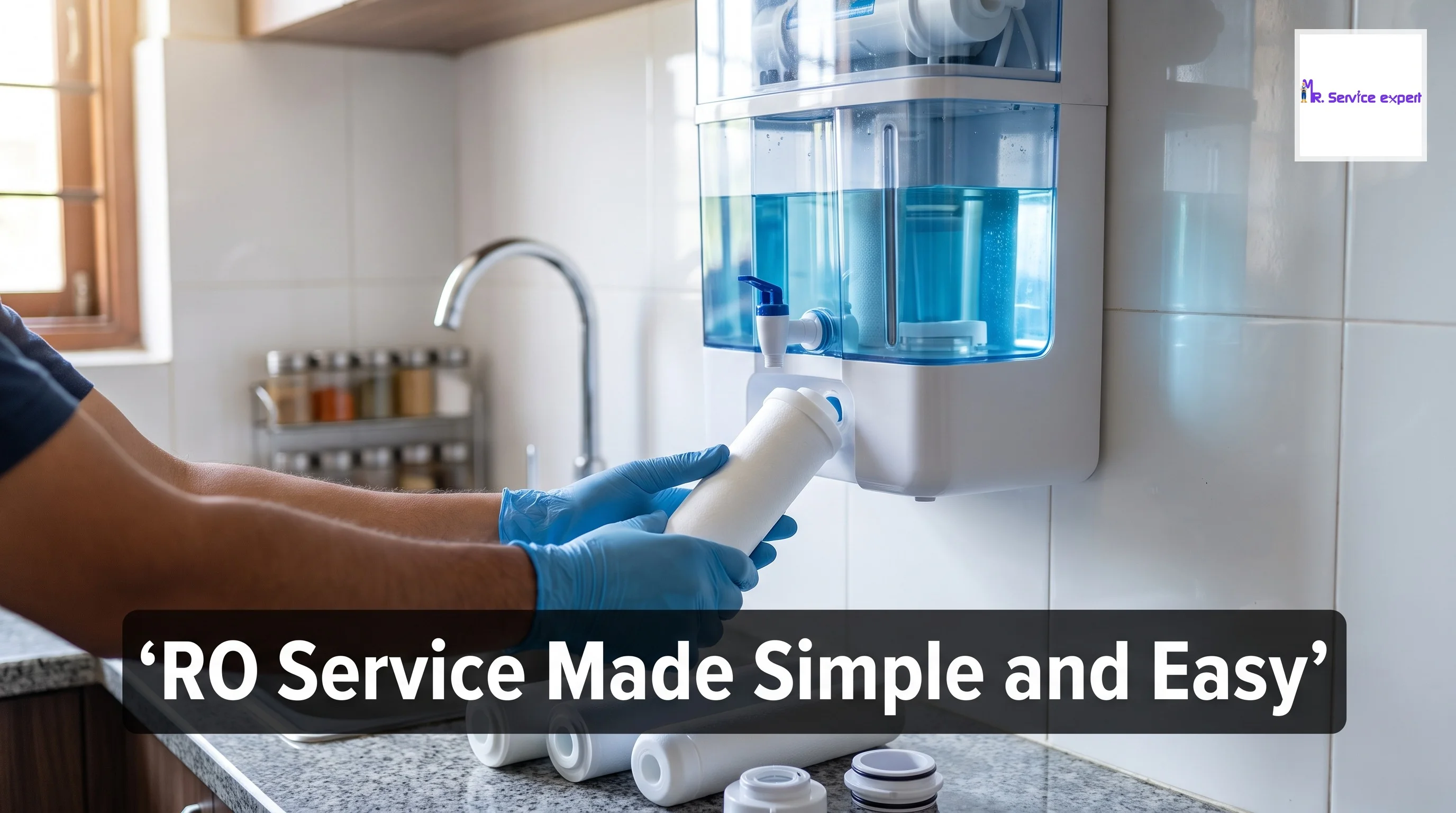
Replace sediment filters yourself if you're comfortable doing so. Most systems have clear filter housings that unscrew easily. Purchase genuine replacement filters from authorized dealers. While doing this, inspect the housing for cracks and clean any accumulated sediment. However, RO membrane replacement and internal component servicing should always be left to qualified professionals.
Professional RO Service: What to Expect
When you schedule professional RO water purifier service, knowing what should happen helps ensure you get quality service. A thorough service visit should last at least 45 minutes to an hour—anything quicker probably means corners are being cut. The Ro Technician should start with testing your input water TDS and comparing it with purified water TDS to assess current performance.
All filters should be inspected and replaced if needed. Expect the technician to open each filter housing, show you the condition of existing filters, and explain why replacement is or isn't necessary. Reputable service providers use genuine parts, not cheap alternatives that compromise performance. Ask to see the filters being installed and check for proper sealing.
The RO membrane should be inspected for scaling or damage. While membrane replacement isn't needed at every service, the technician should evaluate its condition and give you an estimate of remaining life. Membrane cleaning using specific solutions might be performed if buildup is detected but the membrane is still functional.
Storage tank sanitization should be part of comprehensive service. This includes draining completely, cleaning interior surfaces, and checking the tank's air valve pressure if it's a pressurized model. High-pressure pump testing ensures optimal performance and identifies potential motor issues before complete failure.
All connections, tubes, and fittings should be checked for leaks or wear. The technician should tighten connections and replace any damaged tubes. Electrical connections and auto-shut functions should be tested to ensure safety. Before leaving, the technician should test final water quality, explain any replacements made, and provide guidance on next service timing.
Cost Considerations for Regular RO Maintenance
Understanding costs helps you budget for proper RO purifier maintenance without cutting corners due to expense concerns. A basic quarterly service without filter replacement typically costs between 300 to 600 rupees depending on your city and service provider. This covers inspection, cleaning, and minor adjustments.
Filter replacement costs vary by type and brand. Sediment and carbon filters usually cost 200 to 400 rupees each, while post-carbon filters range from 150 to 300 rupees. Purchasing a complete filter kit with multiple filters together often provides savings, typically costing 1000 to 1500 rupees for a set.
RO membrane replacement is the major expense, ranging from 1500 to 3500 rupees depending on membrane capacity and quality. Genuine membranes from reputed manufacturers cost more but last longer and perform better than cheap alternatives. Many people try to save money with economy membranes only to need replacement again within a year.
Annual maintenance contracts offered by service providers range from 1500 to 3500 rupees per year. These typically include 3-4 service visits and discounts on parts. For families wanting hassle-free maintenance, AMCs provide good value and ensure regular service doesn't get overlooked.
Emergency water purifier repair service outside scheduled visits usually costs more, often with additional visit charges of 200 to 500 rupees beyond parts and labor. This makes preventive maintenance even more economical than waiting for breakdown situations.
Compare these costs against the investment in your purifier itself, which ranges from 8000 to 25000 rupees for most households. Annual maintenance averaging 2500 to 4000 rupees seems reasonable to protect that investment and ensure safe drinking water. Consider too that medical expenses from waterborne illness far exceed maintenance costs—prevention truly is cheaper than cure.
Choosing the Right Service Provider
Finding a reliable technician or service company makes all the difference in effective RO purifier maintenance. Authorized brand service centers offer the advantage of trained technicians familiar with your specific model and access to genuine parts. However, they sometimes charge premium prices and may have limited availability in smaller cities.
Local independent service providers often offer competitive pricing and flexible scheduling. The challenge is verifying their expertise and parts quality. Ask for references from neighbors or check online reviews before committing. A good independent technician builds business through reputation and often provides more personalized service than corporate centers.
Look for service providers who explain what they're doing rather than working secretively. Transparency about parts condition, replacement needs, and costs indicates professional integrity. Be cautious of technicians who always claim every component needs replacement at every visit—this is often unnecessary upselling.
Verify that the service provider has proper tools and testing equipment, especially a TDS meter to measure water quality before and after service. Technical expertise matters more than friendly demeanor—your water quality depends on their knowledge and skill.
Consider response time for urgent issues. A service provider who takes three days to respond to your call about leaking water or complete system failure isn't reliable for emergency situations. Establish the relationship with initial routine service, then you'll know who to call when urgent water purifier repair service is needed.
Regional Water Quality and Service Requirements
India's vast geography means water quality varies dramatically between regions, affecting your RO service frequency significantly. Northern plains states like Punjab, Haryana, and western Uttar Pradesh typically have very hard water with high TDS, often exceeding 1500-2000 ppm. Here, membranes work extremely hard and filters need more frequent replacement, possibly every 4-6 months for pre-filters.
Coastal regions including parts of Gujarat, Maharashtra, Andhra Pradesh, and Tamil Nadu sometimes face water with high salinity or chloride content. This requires special attention to membrane condition and more frequent carbon filter replacement to remove chlorine used heavily in municipal treatment.
Metropolitan cities with mixed water sources present unique challenges. Delhi's water quality varies by locality, from relatively clean Yamuna water in some areas to groundwater with high hardness in others. Mumbai primarily uses surface water from lakes, which is relatively better quality but highly chlorinated. Service schedules should match your specific water source rather than generic city-wide recommendations.
Hilly regions and northeastern states generally have softer water with lower TDS, meaning RO membranes last longer and service intervals can be slightly extended. However, these areas face different challenges like organic contamination during heavy rains requiring attention to sediment and bacterial removal.
Understanding your local water quality through periodic testing helps customize your maintenance schedule. Many water purifier repair service providers offer free water testing—take advantage of this to optimize your service timing and component selection for your specific water conditions.
Keeping Your RO Purifier Healthy for Years
Your RO water purifier represents an important investment in your family's health and wellbeing. With proper care and timely maintenance, it will serve you reliably for many years. Remember that the small effort of regular service prevents the frustration of breakdowns, the expense of major repairs, and most importantly, protects your family from unsafe drinking water. Whether you choose professional service contracts or manage maintenance yourself with periodic expert help, consistency matters more than perfection. Make RO purifier maintenance a routine part of your household management, just like paying utility bills or restocking groceries. Your future self—and your family's health—will thank you for the diligence.