

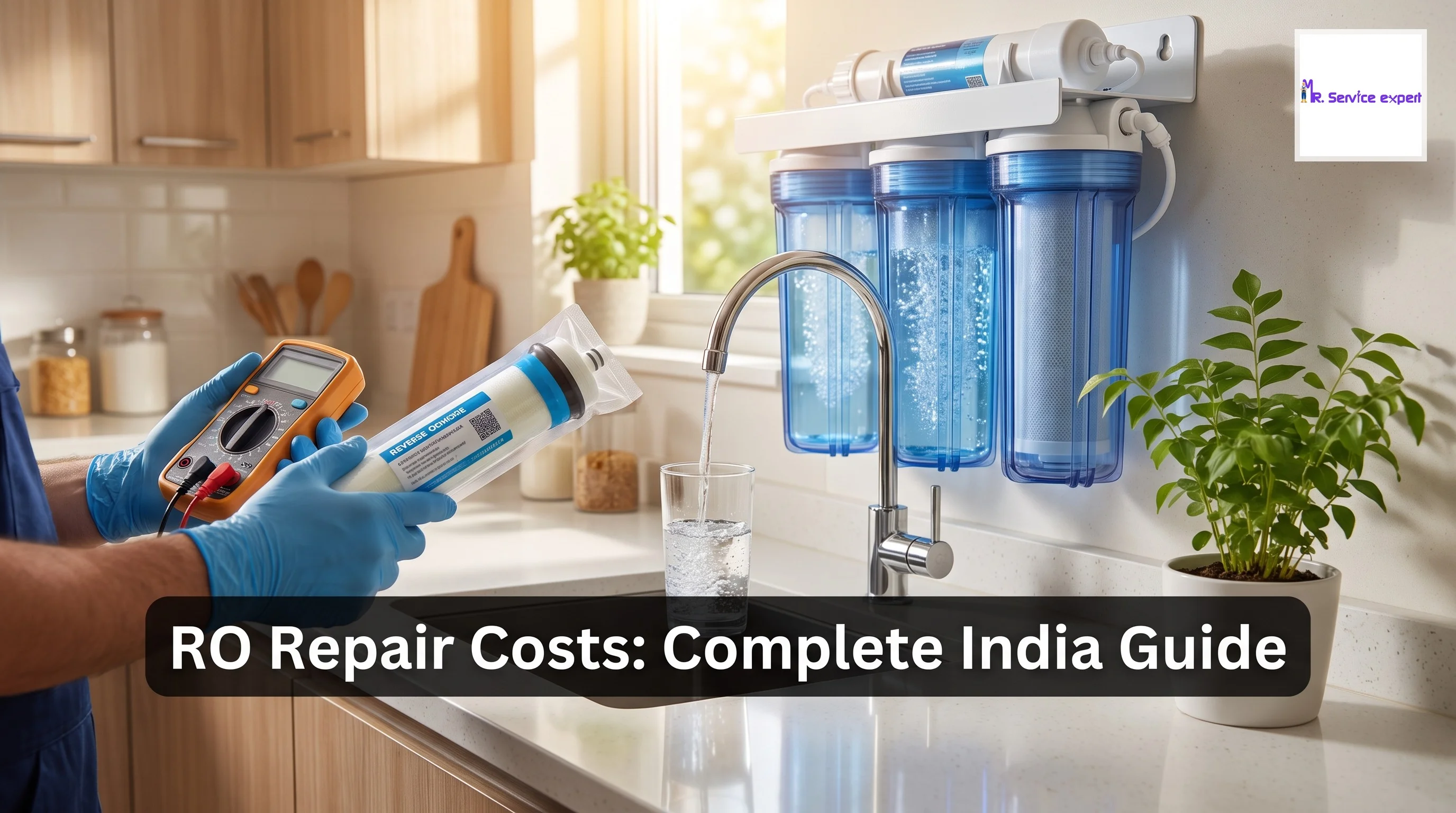
RO Water Purifier Repair Cost Guide
Clean drinking water isn't just a luxury anymore—it's become essential in every Indian household. If you've got an RO water purifier sitting in your kitchen, you know how frustrating it gets when it starts acting up. Maybe the water flow has slowed to a trickle, or there's an annoying dripping sound that won't stop. Whatever the issue, one question immediately pops up: how much is this going to cost me? Understanding RO water purifier repair cost helps you budget better and avoid getting overcharged by technicians. The good news? Most repairs are actually pretty affordable when you know what to expect. The RO service price varies depending on what's broken, which part needs replacing, and whether you're in a metro city or a smaller town. This guide breaks down everything you need to know about repair costs, so you can make informed decisions and keep your purifier running smoothly without burning a hole in your pocket.
Before you panic about expensive repairs, it's worth knowing that many common RO issues have straightforward fixes. The cost typically depends on factors like the age of your purifier, the brand, the specific component that's malfunctioning, and where you live. Metropolitan areas generally have higher service charges compared to tier-2 or tier-3 cities. Labor costs also vary—some technicians charge a flat visit fee, while others bill hourly. Parts replacement forms the bulk of repair expenses, and original manufacturer parts usually cost more than generic alternatives.
Most homeowners spend between 500 to 3000 rupees on routine RO repairs annually. However, major component failures can push costs higher, sometimes reaching 5000 rupees or more. The key is catching problems early. A small membrane issue today can turn into a complete system breakdown tomorrow if ignored. Regular maintenance actually saves money in the long run by preventing costly emergency repairs. Think of it like taking your car for regular servicing—the upfront cost prevents bigger headaches later.
Another crucial factor affecting RO water purifier repair cost is whether your unit is still under warranty. Many manufacturers offer 1-2 years of comprehensive coverage, which can save you thousands. Even after the warranty expires, some brands provide discounted service packages for existing customers. It's always smart to check your warranty status before calling a Water purifier technician. You might find that certain repairs or parts are covered, significantly reducing your out-of-pocket expense.
Understanding the typical pricing structure also helps you spot unfair charges. When you know that a basic filter replacement shouldn't cost more than 800 rupees, you won't accept a quote for 2000 rupees without questioning it. Knowledge is power, especially when dealing with home appliance repairs. This guide will walk you through common repair scenarios, expected costs, and tips to ensure you're getting fair value for your money.
Common RO Repair Issues and Their Costs
Let's dive into the specific problems you're likely to encounter and what they'll set you back. Water not flowing or reduced water flow tops the list of complaints. This usually indicates a clogged filter or a faulty pump. Filter replacement costs between 400 to 1200 rupees depending on the type—sediment filters are cheaper, while carbon filters cost more. If it's the pump causing trouble, expect to pay 1500 to 3000 rupees for replacement including labor.
Strange tastes or odors in purified water often point to exhausted filters or a contaminated membrane. Carbon filter replacement ranges from 500 to 900 rupees, while RO membrane replacement is pricier at 1800 to 3500 rupees. The membrane is the heart of your system, so this is where you'll spend the most. However, membranes typically last 2-3 years with proper maintenance, so this isn't an annual expense.
Water leakage is another frequent issue that can't be ignored. Leaks usually stem from loose connections, damaged tubing, or faulty housing seals. Minor leak repairs might only cost 200 to 500 rupees for tightening connections or replacing small tubes. More serious leaks requiring housing replacement can run 800 to 1800 rupees. The ro service near me searches spike during monsoon when water pressure fluctuations cause more leaks.
Electrical problems like the purifier not switching on, indicator lights malfunctioning, or automatic shut-off failures typically involve the SMPS (power supply), solenoid valve, or control panel. SMPS replacement costs 800 to 1500 rupees, solenoid valve replacement runs 600 to 1200 rupees, and control panel issues can cost 1000 to 2500 rupees depending on complexity. These repairs require skilled ro technician expertise, so don't attempt DIY fixes that might void warranties.
Storage tank problems including bad taste from the tank, tank not filling, or air pressure issues need attention too. Tank cleaning services cost 300 to 600 rupees, while tank bladder or complete tank replacement ranges from 1200 to 2800 rupees. Regular tank sanitization prevents bacterial growth and extends tank life.
Detailed RO Service Price Breakdown
Understanding how service providers structure their pricing helps you budget accurately. Most Ro Water purifier repair service follows a basic cost model: diagnostic visit fee, labor charges, and parts cost. Diagnostic fees range from 150 to 400 rupees in most cities, though some service providers waive this if you proceed with the repair.
Labor charges vary widely based on location and technician expertise. In metro cities like Mumbai, Delhi, Bangalore, and Chennai, expect hourly rates between 300 to 600 rupees. Tier-2 cities see rates of 200 to 400 rupees per hour, while smaller towns might charge 150 to 300 rupees. Most routine repairs take 30 minutes to 2 hours, so calculate labor costs accordingly.
Parts pricing depends on whether you choose original manufacturer components or compatible generic parts. Original parts cost 20-40 percent more but come with quality assurance and often include warranty. Generic parts are budget-friendly but may have shorter lifespans. Here's a typical cost comparison:
| Component | Original Part Cost | Generic Part Cost | Labor Cost | Total Cost Range |
|---|---|---|---|---|
| Sediment Filter | 500-700 | 300-450 | 200-300 | 500-1000 |
| Carbon Filter | 600-900 | 400-600 | 200-300 | 600-1200 |
| RO Membrane | 2500-3500 | 1500-2200 | 300-500 | 1800-4000 |
| Water Pump | 2000-2800 | 1200-1800 | 400-600 | 1600-3400 |
| UV Lamp | 800-1200 | 500-800 | 200-300 | 700-1500 |
| SMPS Unit | 1000-1500 | 600-1000 | 200-400 | 800-1900 |
| Storage Tank | 1800-2800 | 1000-1800 | 300-500 | 1300-3300 |
Service packages offer better value than individual repairs if your purifier needs multiple fixes. Annual maintenance contracts typically cost 1500 to 3500 rupees and cover 3-4 service visits, filter replacements, and general maintenance. These packages reduce the RO service price significantly over individual service calls.
Emergency or same-day service requests usually carry premium charges—expect to pay 30-50 percent more during evenings, weekends, or holidays. Planning repairs during regular business hours saves money. Also, technicians serving remote areas or locations far from their service center may add travel charges of 100 to 300 rupees.
Types of RO Services and Maintenance Plans
Beyond one-time repairs, various service options cater to different needs and budgets. Understanding these helps you choose the most cost-effective approach for your situation. Basic cleaning and filter replacement services form the foundation of RO maintenance. Scheduled every 3-6 months, these preventive services cost 500 to 1200 rupees per visit and include sediment and carbon filter replacement, external cleaning, and basic system checks.
Comprehensive servicing goes deeper, involving complete system sanitization, membrane cleaning, TDS level testing, water flow optimization, and component inspection. These thorough services cost 1200 to 2500 rupees and should be done annually. They prevent major breakdowns and extend your purifier's lifespan significantly.
Annual Maintenance Contracts provide the best value for regular users. AMCs typically include quarterly servicing, filter replacements, emergency repairs, and discounted parts. Basic AMCs start around 1500 rupees annually, covering filters and labor for routine maintenance. Premium AMCs costing 3000 to 5000 rupees include membrane replacement and cover most component failures except major parts like pumps and storage tanks.
On-demand repair services suit those who prefer paying per incident rather than upfront AMC costs. While you avoid recurring annual fees, individual service calls can add up. The RO water purifier repair cost per call ranges from 400 to 3000 rupees depending on the issue, making this option potentially more expensive over time if problems occur frequently.
Installation and reinstallation services are often needed when moving homes or relocating the purifier within your house. Professional installation costs 500 to 1200 rupees, ensuring proper connection and optimal functioning. DIY installation might seem cheaper, but improper setup leads to leaks, reduced efficiency, and voided warranties.
Water quality testing services help determine whether your purifier is performing correctly. TDS testing costs 100 to 300 rupees, while comprehensive water analysis checking for bacteria, heavy metals, and chemical contaminants runs 800 to 2000 rupees. These tests verify your purifier's effectiveness and help diagnose performance issues.
Factors Affecting Your Repair Costs
Several variables influence how much you'll ultimately pay for RO repairs. Brand and model play significant roles—premium brands typically have higher service charges and parts costs, but their components often last longer. Popular mainstream brands offer better parts availability and competitive pricing. Imported models may require special-order components, increasing both cost and waiting time.
Age and condition of your purifier directly impact repair expenses. Newer units under three years old usually need minor repairs costing 500 to 1500 rupees. Purifiers aged 4-7 years require more frequent servicing and part replacements, with annual costs reaching 2000 to 4000 rupees. Units older than 8 years may need major overhauls costing 5000 rupees or more, at which point replacement might be more economical than repair.
Water quality in your area significantly affects component wear. Regions with high TDS levels, heavy sediment, or hard water stress RO systems more, requiring frequent filter changes and earlier membrane replacement. Coastal areas with high salinity and industrial zones with chemical contamination see faster component degradation. If you're dealing with challenging water conditions, budget an extra 20-30 percent for maintenance.
Usage patterns also matter—a purifier serving a family of six works harder than one for a couple, naturally wearing out faster. Heavy usage accelerates filter saturation and membrane fouling, necessitating more frequent replacements. Calculate your daily water consumption to estimate service frequency; families purifying more than 30 liters daily should budget for quarterly rather than semi-annual servicing.
Service provider choice affects RO service price considerably. Authorized brand service centers charge premium rates but offer genuine parts, trained technicians, and warranty protection. Third-party local technicians cost 20-40 percent less but may use non-genuine parts without warranty coverage. For major repairs or warranty claims, authorized centers are worth the premium. For minor fixes post-warranty, reliable local technicians offer good value.
Geographic location creates substantial cost variations. Metro cities have higher labor rates but more service options and competition. Smaller towns see lower labor costs but limited parts availability, potentially requiring ordering from distant locations. Rural areas face the highest challenges with limited technician availability and significant travel charges, sometimes adding 500 rupees or more to the base cost.
Tips to Reduce RO Repair and Maintenance Costs
Smart maintenance habits can slash your annual RO expenses by half or more. Regular pre-filter cleaning is the simplest money-saver—rinse sediment filters every 15 days to extend their life and reduce replacement frequency. This five-minute task can make your 600-rupee filter last 6 months instead of 3.
Timely filter replacement prevents cascade failures. When you delay changing saturated filters, the RO membrane works overtime and degrades faster. Replacing a 700-rupee filter on schedule saves you from a 3500-rupee membrane replacement later. Follow manufacturer recommendations—typically sediment filters every 6 months, carbon filters every 6-12 months, and RO membranes every 2-3 years.
Monitor your TDS levels monthly using an inexpensive TDS meter costing just 200 to 500 rupees. Rising output TDS indicates membrane wear or filter exhaustion, allowing early intervention before complete failure. This proactive approach prevents emergency repairs that cost significantly more than scheduled maintenance.
Choose AMC plans wisely by comparing what different providers offer. Calculate your expected annual costs for filters and servicing, then check if the AMC saves money. For most households, AMCs covering filters and quarterly servicing pay for themselves while providing convenience. Read the fine print—understand what's included, excluded, and any caps on service calls.
Learn basic troubleshooting to avoid unnecessary service calls. Many issues like purifier not starting, slow water flow, or continuous drain flow have simple fixes: checking power connections, opening inlet valves, or adjusting storage tank pressure. YouTube tutorials and user manuals provide guidance. However, don't attempt electrical or pressure component repairs without proper knowledge—the potential damage outweighs savings.
Buy common consumables like filters in bulk or during sale periods. Many online platforms offer significant discounts on filters, sometimes 20-30 percent off. Stock up on annual requirements when prices drop. Ensure proper storage in cool, dry places to maintain filter quality.
Maintain proper water pressure by installing pressure regulators if your supply has high fluctuations. Unstable pressure damages pumps and solenoid valves, leading to costly repairs. A 500-rupee pressure regulator can prevent 2000-rupee pump replacements.
Keep service records documenting all repairs, part replacements, and service dates. This history helps technicians diagnose recurring issues faster, reduces troubleshooting time and costs, and provides valuable information if you sell your purifier later.
When to Repair vs Replace Your RO Purifier
This critical decision affects both your wallet and water quality. The 50 percent rule provides good guidance: if repair costs exceed half the price of a new equivalent purifier, replacement makes more financial sense. For example, if repairs are quoted at 6000 rupees and a new similar model costs 10000 rupees, consider buying new.
Age matters significantly in this equation. Purifiers beyond 8-10 years old have limited remaining lifespan even after repairs. Technology also advances—newer models offer better efficiency, lower electricity consumption, and superior filtration. The extra 3000-4000 rupees for a new purifier buys you modern features and 2-3 years of trouble-free operation.
Frequency of repairs signals replacement time. If you're calling the ro technician every few months, the cumulative costs quickly surpass replacement expense. Multiple component failures within a short period indicate systemic deterioration rather than isolated issues.
Discover how much you should expect to pay for common RO water purifier repairs in India. Learn more about typical service charges, replacement part costs, and factors that influence repair pricing. Stay informed about maintenance expenses so you can budget wisely and avoid overpaying when your purifier needs attention.